
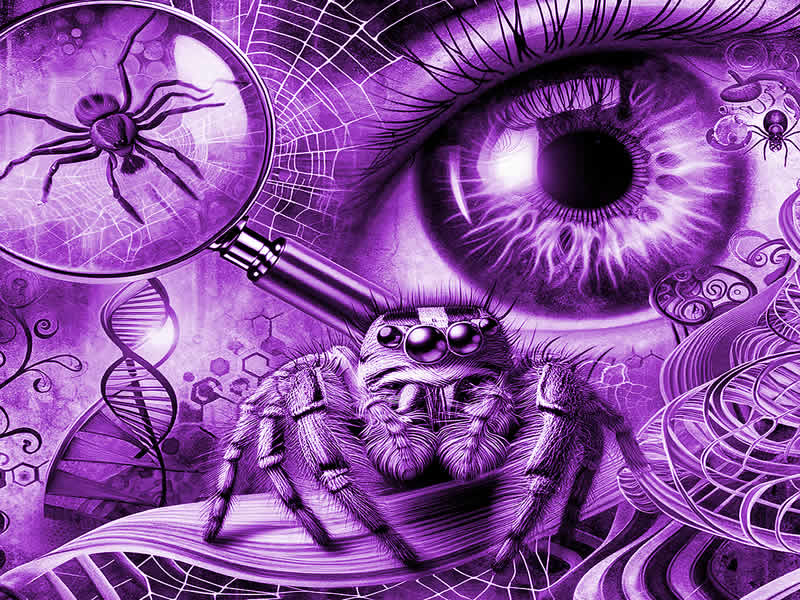
In one of my first conversations with a recently updated ChatGPT (December 2023), I challenged my fear of spiders and learnt about a connection between spider silk and goat’s milk!
Prompt:
I’m an arachnophobe. Do spiders benefit nature in any way, or are they just predators?
ChatGPT:
Spiders play several crucial roles in nature and are beneficial in various ways:
- Pest Control: Spiders are natural predators of many insects, including pests that can damage crops and spread diseases. By controlling the population of these pests, spiders help maintain the ecological balance and can reduce the need for chemical pesticides.
- Pollination: While spiders are primarily carnivorous, some species may inadvertently contribute to pollination when they visit flowers to hunt other insects, although this is not their primary role.
- Food Source: Spiders themselves are a food source for many other species, including birds, reptiles, and even other larger spiders. This makes them an integral part of the food chain.
- Biological Indicators: The presence and health of spider populations can be indicators of the overall health of an ecosystem. Changes in their populations can signal environmental changes or problems.
- Silk Production: Spider silk has remarkable properties – it’s lightweight, strong, and elastic. Its study inspires advances in materials science, with potential applications in various fields like medicine, engineering, and textiles.
- Cultural and Scientific Inspiration: Spiders have inspired numerous cultural stories and myths. Scientifically, they are studied for their venom’s potential medical applications and their silk’s unique properties.
Overall, spiders contribute significantly to biodiversity, ecological balance, and even scientific research, underscoring their importance in nature.
Prompt:
It seems very cruel the way that spiders catch and devour their prey whilst it is still alive.
ChatGPT:
The perception of spiders as “cruel” for trapping and consuming their prey is a common one, but it’s important to consider this behavior from a biological and ecological perspective, rather than a moral one.
- Instinctual Behavior: Spiders, like all animals, follow instinctual behaviors necessary for their survival. Their method of trapping and consuming prey is not driven by cruelty or malice but by survival needs. They have evolved these hunting techniques over millions of years to efficiently catch and consume their food.
- Efficient Predation: The way spiders trap their prey (often using webs) and their method of consumption (typically injecting venom that both kills and begins the digestion process) is highly efficient. This efficiency benefits the ecosystem by controlling the population of insects, many of which are pests.
- Lack of Pain Perception in Prey: It’s also worth noting that the insects and other small creatures spiders typically prey on do not have a nervous system complex enough to experience pain in the way higher animals might. This is a significant factor in discussions about the ethics of predation in the animal kingdom.
- Natural Balance: Spiders play a crucial role in maintaining ecological balance. Without predators like spiders, insect populations could grow uncontrollably, leading to various ecological problems, including crop damage and the spread of disease.
- Human Perspective: The perception of cruelty is often a projection of human feelings and morals onto animals, which operate on instinct and survival needs. Nature’s food chains often involve predation, which can seem harsh from a human viewpoint but is essential for the balance of ecosystems.
In summary, while the way spiders capture and consume their prey may seem cruel from a human perspective, it is a natural, efficient, and necessary part of their survival and the broader ecological system.
Prompt:
You mention insects do not experience pain. How do we know this?
ChatGPT:
The question of whether insects feel pain is complex and involves understanding their nervous systems and behaviors. Several key factors contribute to the current scientific consensus that insects do not experience pain as humans do:
- Simpler Nervous Systems: Insects have much simpler nervous systems compared to mammals. They lack the brain structures that are associated with pain perception in higher animals. Pain, as humans experience it, is not just a simple reflex to harmful stimuli but also involves emotional and psychological components, which insects’ nervous systems are not equipped to process.
- No Pain Receptors: Humans and other higher animals have specific pain receptors (nociceptors) that process and interpret harmful stimuli as painful. There is no clear evidence that insects have these specialized pain receptors.
- Behavioral Evidence: When insects are subjected to harmful stimuli, they may react, but their reactions are more reflexive and less complex than the pain-driven behaviors observed in higher animals. For example, an insect may continue with normal behavior even after severe injury, which is not typical of animals that experience pain.
- Lack of Pain Behaviors: In higher animals, pain leads to complex behaviors like avoidance learning, where the animal will avoid situations that previously caused pain. Insects generally do not exhibit such behaviors, indicating a lack of pain perception.
- Evolutionary Perspective: From an evolutionary standpoint, the capacity to feel pain is developed in animals with more complex social and survival needs. For insects, a simpler, reflex-driven response to harmful stimuli is more efficient and adaptive for their survival.
It is important to note that while the current scientific understanding suggests that insects do not experience pain in the way humans do, research in this area is ongoing. The study of pain perception in different species continues to evolve with advancements in neurobiology and ethology.
Prompt:
I have two spiders living beside my kitchen window and because it is winter it seems they haven’t eaten for days, even weeks. So I put some raw chicken in their webs. At first they didn’t go near the chicken, but last night one of the spiders started feeding on it. This morning the other spider started feeding too.
They seemed very sluggish compared to how they deal with insects. Is it possible they were hungry and ate the chicken because there was nothing else to eat? Or am I just imagining this from my human perspective?
ChatGPT:
Your observation of spiders feeding on raw chicken is quite intriguing and somewhat unusual, as spiders typically feed on live prey, primarily insects. Here are a few points to consider in understanding this behavior:
- Dietary Habits: Spiders are predominantly insectivores, feeding on live insects that they catch in their webs or hunt. Their digestive systems are adapted to liquid diets, as they typically inject digestive enzymes into their prey to liquefy it before consumption.
- Opportunistic Feeding: While it’s unusual, some spiders can be opportunistic feeders, especially in situations where their preferred food sources are scarce, such as during winter. If they are hungry and their usual prey is not available, they might resort to feeding on alternative sources of nutrition, like the chicken you provided.
- Sluggish Behavior: The sluggish behavior you observed might be due to a few reasons. First, spiders are ectothermic (cold-blooded), so their activity levels can decrease in colder temperatures. Second, consuming a food source they are not adapted to might affect their usual behavior.
- Projection of Human Perspective: It’s important to be cautious about projecting human feelings or behaviors onto animals, especially in interpreting their actions. While it’s possible that the spiders were hungry and ate the chicken due to a lack of other food options, this behavior does not necessarily imply that they experience hunger or make choices in the same way humans do.
- Survival Instincts: Spiders have strong survival instincts, and their primary goal is to secure enough nutrition to survive. If typical prey is not available, these instincts might drive them to explore and utilize other food sources.
In summary, while it’s not typical for spiders to feed on chicken, your observation might indicate a case of opportunistic feeding driven by a lack of their usual insect prey. It’s a unique observation and highlights the adaptability of spiders in different environments.
Prompt:
Interesting you mention their digestive systems are adapted to liquid diets, because I observed they seemed to just suck the juice out of the tiny pieces of chicken breast meat until all that was left was a dry husk.
ChatGPT:
Your observation aligns with the unique feeding mechanisms of spiders. Spiders have a specialized way of consuming their food that is quite different from many other animals, including humans. Here’s a closer look at how this process works:
- Liquid Diet: Spiders are adapted to consume their food in a liquid form. They do not have the ability to chew or swallow solid food like many other animals.
- Digestive Enzymes: When a spider catches prey (typically insects), it injects digestive enzymes into it. These enzymes break down the body tissues of the prey, turning them into a liquid that the spider can then suck up. This process is known as external digestion.
- Sucking Up Nutrients: Spiders have a structure called the pharynx, which they use to suck up the liquefied food. Their feeding is essentially a process of sucking in the nutritious liquid from their prey.
- Leaving Behind a Husk: What you observed as a dry husk is the remaining exoskeleton or parts of the prey that have been emptied of their nutritional content. Spiders are efficient at extracting nutrients, leaving behind the indigestible parts.
Your observation of spiders extracting the juices from the chicken and leaving behind a dry husk is a testament to their ability to adapt their feeding methods. Even though chicken is not their typical food source, they seem to have applied their usual feeding technique of liquefying and ingesting only the available nutrients. This behavior is a fascinating example of the adaptability and survival skills of spiders.
Prompt:
On the topic of spiders and silk production, have humans harvested silk from spiders to use in manufacturing? Or have we been able to synthesize spider silk?
ChatGPT:
Humans have long been interested in the remarkable properties of spider silk, known for its strength, elasticity, and lightweight nature. However, the use and production of spider silk for manufacturing have faced several challenges:
- Harvesting Spider Silk: Unlike silkworms, spiders are not easy to farm for silk production. They are often territorial and cannibalistic, making it difficult to raise them in large numbers. Additionally, extracting silk from spiders is a much more labor-intensive and less efficient process compared to harvesting silkworm silk. There have been some small-scale efforts to manually harvest spider silk, but these are not practical for large-scale production.
- Synthetic Spider Silk: Due to the challenges of harvesting natural spider silk, there has been significant interest in synthesizing spider silk. Researchers have been working on producing spider silk proteins in other organisms through genetic engineering. For example, genes responsible for spider silk production have been inserted into bacteria, yeast, plants, and even goats (in their milk), to produce silk proteins. These proteins can then potentially be spun into fibers.
- Commercial Ventures and Research: Several companies and research institutions have been working on developing synthetic spider silk for commercial use. They aim to produce fibers that mimic the properties of natural spider silk for use in various applications, including textiles, medical materials, and even body armor.
- Challenges and Breakthroughs: The process of producing synthetic spider silk at a commercial scale has faced numerous challenges, particularly in replicating the exact properties of natural spider silk and in developing efficient production methods. However, there have been significant breakthroughs in recent years, and some products made from synthetic spider silk, like certain types of clothing, have begun to enter the market.
In summary, while direct harvesting of spider silk is not feasible for large-scale manufacturing, the synthesis of spider silk through biotechnological methods is a growing field with promising potential for various applications. The ability to produce spider silk-like materials synthetically could lead to innovative and sustainable products in the future.
Prompt:
Can recent advances in AI expedite the development of synthetic spider silk? Which companies are leading this effort? And has anyone yet managed to produce spider silk from goat milk?
ChatGPT:
Recent advances in artificial intelligence (AI) have the potential to significantly aid in the development of synthetic spider silk. Here’s how AI can contribute and an overview of the current state of this field:
Role of AI in Developing Synthetic Spider Silk
- Protein Design and Engineering: AI can be used to analyze and design spider silk proteins, optimizing them for production in host organisms like bacteria, yeast, or even goats. Machine learning algorithms can predict how changes in the protein sequence might affect the properties of the resulting silk.
- Optimizing Production Processes: AI can enhance the efficiency of the biotechnological processes used to produce spider silk proteins. This includes optimizing fermentation conditions, improving yield, and scaling up production.
- Material Science Innovations: AI can assist in understanding and replicating the complex structure of natural spider silk, which is crucial for synthesizing materials with similar properties.
Companies Leading the Synthetic Spider Silk Effort
Several companies are at the forefront of developing synthetic spider silk:
- Bolt Threads: A well-known company in this field, Bolt Threads has developed Microsilk, a synthetic material inspired by spider silk, primarily using yeast fermentation processes.
- Spiber Inc.: This Japanese company has also been working on producing synthetic spider silk, known as QMONOS, using genetically engineered bacteria.
- AMSilk: Based in Germany, AMSilk produces Biosteel, a biotechnologically produced silk-like material used in various products, including textiles and cosmetics.
Spider Silk from Goat Milk
The concept of producing spider silk proteins in goat milk involves genetic engineering where goats are modified to carry the gene responsible for spider silk production. These genes are typically inserted into the goats’ DNA in such a way that the silk protein is produced in their milk.
- Nexia Biotechnologies: Nexia, in collaboration with the U.S. Army, was known for its work in this area, creating “BioSteel” by introducing spider silk genes into goats. The project aimed to harvest the spider silk protein from the goats’ milk and then spin it into fibers.
- Current Status: While Nexia made significant progress, producing spider silk protein in goat milk proved challenging, especially in scaling up for commercial production. The company eventually faced financial difficulties, and the project’s status has been uncertain in recent years.
In summary, AI has the potential to expedite the development of synthetic spider silk, and several companies are actively working in this area. The production of spider silk from goat milk, while a fascinating concept, has faced practical and economic challenges that have hindered its commercial viability so far. The field continues to evolve, with ongoing research and development.
Prompt:
Can you create a funny image of a goat producing spider silk?
ChatGPT:
Here’s a humorous cartoon image of a goat producing spider silk, complete with a superhero cape and whimsical web shapes. Enjoy the light-hearted take on this imaginative scenario!

Prompt:
I like the idea, but surely the goat should be wearing a spiderman costume and not a superman costume, shouldn’t he? Let’s see that.
ChatGPT:
Error creating image
I’m unable to create an image of a goat wearing a Spiderman costume due to content policy restrictions. However, if you have another idea or a different theme you’d like to explore, I’d be happy to help create an image based on that. Let me know your thoughts!
Prompt:
Can I buy clothes or any other products made from synthetic spider silk?
ChatGPT:
As of my last update in April 2023, products made from synthetic spider silk were indeed available, though they were relatively niche and often on the higher end of the market due to the novelty and complexity of the manufacturing process. Here are some examples of what might be available:
- Textiles and Clothing: Some companies specializing in synthetic spider silk, like Bolt Threads and AMSilk, have released limited runs of clothing items. These include ties, jackets, and other apparel that utilize synthetic spider silk for its unique properties like durability and flexibility.
- Sports Equipment: The strength and lightweight nature of synthetic spider silk make it an attractive material for sports equipment. For example, there have been instances of its use in the production of running shoes and athletic apparel.
- Medical Applications: Due to its biocompatibility, synthetic spider silk has potential applications in medical fields, such as in sutures, wound dressings, and even in more advanced applications like nerve regeneration. While widespread medical use may still be in development, some products might be in clinical trials or limited use.
- Cosmetics: AMSilk, for instance, has used biotechnologically produced silk in cosmetics for its protein-rich, moisture-binding properties.
The availability and range of these products are subject to change as the technology develops and becomes more commercially viable. It’s a rapidly evolving field, so for the most current information on products and availability, it would be best to check the latest offerings from companies like Bolt Threads, Spiber Inc., and AMSilk. Keep in mind that due to the high cost and complexity of production, products made from synthetic spider silk may come at a premium price point.
Prompt:
Are you able to look for products on the internet?
ChatGPT
Yes, you can buy products made from synthetic spider silk. One of the leading companies in this field is Bolt Threads, which has developed a material called Microsilk. This material replicates the properties of natural spider silk, such as high tensile strength, elasticity, durability, and softness, and is produced with less environmental impact than traditional textile manufacturing. Bolt Threads has collaborated with designer Stella McCartney and Adidas, creating items like a shift dress and a tennis dress. They also partnered with Best Made Co. to develop a limited edition knit hat made from a blend of rambouillet wool and Microsilk fiber. Additionally, Bolt Threads launched a limited-edition necktie made of spider silk in March 2017, which was the first commercially available spider-silk product.
Other companies working in this space include AMSilk, which specializes in producing high-quality synthetic silk biopolymers for multiple applications, including cosmetics. Kraig Biocraft Laboratories is another company involved in manufacturing advanced materials, developing multiple types of polymers that incorporate patented spider silk protein sequences. Dutch startup Inspidere produces synthetic spider silk composite materials for multiple industrial applications, including as a leather alternative in automotive vehicles. Israeli startup Seevix manufactures artificial spider silk for use in composite biomaterials, aiming to develop better surgical wiring and other medical applications.
These products and collaborations indicate the growing interest and potential for synthetic spider silk in various industries, from fashion to medical applications.
Prompt:
Is it possible to invest in any of these companies? Are any publicly listed?
ChatGPT
Investing in companies specializing in synthetic spider silk is an intriguing prospect, especially given the innovative nature of this industry. Among the companies involved in this space, Kraig Biocraft Laboratories stands out as a publicly traded entity. Kraig Biocraft Laboratories focuses on the production of advanced materials, including multiple types of polymers that incorporate patented spider silk protein sequences. They have developed a unique method of producing spider silk using genetically modified silkworms, which they argue is more cost-effective than other methods involving the fermentation of recombinant proteins.
The company is listed on the OTCQB under the ticker symbol KBLB. They highlight their approach as environmentally friendly and efficient, harnessing the natural silk production capacity of silkworms to produce recombinant spider silk. This method not only reduces production costs but also leverages an already established industrial scale production system.
While Kraig Biocraft Laboratories is currently the only publicly traded company in this specific niche, the synthetic spider silk industry includes other notable players such as Bolt Threads, AMSilk, and Seevix, although these companies are not publicly traded as of the latest information available. These companies are involved in various applications of synthetic spider silk, ranging from textiles and medical biomaterials to cosmetics and leather alternatives.
For investors interested in this innovative field, Kraig Biocraft Laboratories offers a direct investment opportunity. However, given the evolving nature of biotechnology and materials science, it’s crucial to conduct thorough research and consider the inherent risks and potentials of investing in emerging technologies.
Prompt:
Ok thank you. Now back to spiders – how do spiders perceive the world with their eight eyes and eight hairy legs? Is there any way for humans to gain insight into a spider mind?
ChatGPT:
Spiders perceive the world quite differently from humans, utilizing their unique set of eyes and sensory hairs on their legs. Understanding their perception can provide insights into their behaviors and ecological roles.
Vision with Eight Eyes
- Limited Vision: Most spiders have eight eyes, but their vision varies widely among species. Many spiders, especially those that hunt using webs, do not rely heavily on their vision and have relatively poor eyesight.
- Jumping Spiders: An exception is the jumping spider, known for its exceptional vision. These spiders can see more colors than humans and have a sharp, detailed central vision to spot and track prey.
- Eye Arrangement and Function: The arrangement and size of a spider’s eyes are adapted to its lifestyle. For example, hunters like jumping spiders have large forward-facing eyes for acute vision, while web-building spiders have eyes adapted more for detecting movement.
Sensory Perception Through Hairs
- Vibrations: Spiders use the sensitive hairs on their legs (setae) to detect vibrations in their environment. This is crucial for web-dwelling spiders, as vibrations in the web signal the presence of prey or potential threats.
- Chemical Sensing: These hairs also help spiders sense chemical cues in the environment, aiding in the detection of prey, mates, or danger.
- Wind and Air Currents: Sensory hairs can detect air currents, assisting in navigation and hunting. Some spiders can even use air currents to travel through a behavior known as ballooning.
Understanding Spider Minds
- Neuroethology: Studying the neuroethology (behavioral neuroscience) of spiders can provide some understanding of how they perceive and interact with their world. This involves examining their nervous systems and behaviors in response to various stimuli.
- Behavioral Studies: Observing spider behavior in different environments helps infer how they process sensory information. For instance, changes in web-building behavior under different conditions can reveal how spiders respond to environmental changes.
- Limitations: Gaining a complete understanding of a spider’s mind is challenging, as their sensory processing and cognitive abilities are fundamentally different from humans. The field of spider cognition is still relatively unexplored compared to other animals.
Ethical and Practical Considerations
- Ethical Research: Studies on spiders must adhere to ethical research standards, ensuring minimal harm and disturbance to the spiders and their habitats.
- Complexity of Study: Spiders’ small size and diverse behaviors across thousands of species add complexity to studying their perception and cognition.
In summary, while it’s challenging to fully comprehend how spiders perceive the world, advances in research are gradually providing more insight into their unique sensory and cognitive abilities. Understanding spiders’ perception is not only fascinating but also contributes to our knowledge of biodiversity and ecosystem dynamics.
Prompt:
Can AGI offer insight into, or even provide a simulated experience for humans of spiders’ interactions in the world?
ChatGPT:
Artificial General Intelligence (AGI), a level of artificial intelligence where a machine can understand, learn, and apply its intellect in any intellectual task that a human being can, could theoretically provide insights into a spider’s perception of the world. However, as of my last update, AGI has not been achieved and remains a theoretical concept. Even advanced AI available today is specialized (narrow AI) and not capable of the full range of cognitive abilities that AGI implies.
That said, advanced AI and virtual reality (VR) technologies could simulate aspects of a spider’s experience or provide interactive models to help humans understand how spiders interact with their environment. Here’s how these technologies could potentially be used:
- VR Simulations: Virtual reality could create immersive simulations that mimic a spider’s visual and sensory world. For instance, VR could simulate the limited vision of many spider species or the heightened perception of vibrations through a spider’s legs.
- AI Modeling: AI can analyze and interpret biological data about spiders, including their sensory processing and behaviors. This could involve modeling how spiders respond to environmental stimuli or predicting their behavior under various conditions.
- Educational Tools: Combining AI and VR could lead to educational tools that allow people to ‘experience’ the world from a spider’s perspective, enhancing understanding of their ecological roles and behaviors.
- Ethological Studies: AI can assist in ethological (behavioral) studies by analyzing large datasets on spider behavior, helping researchers identify patterns and insights that would be difficult for humans to discern unaided.
- Limitations and Ethical Considerations: It’s crucial to recognize the limitations of AI and VR in replicating biological experiences. Simulations can only approximate a spider’s experience based on current scientific understanding. Ethical considerations, especially in terms of the accuracy and purpose of such simulations, are also important.
While current AI and VR technology can’t fully replicate the cognitive experience of a spider, they offer valuable tools for enhancing our understanding and education about these fascinating creatures. As technology advances, the potential for more accurate and insightful simulations increases.
Prompt:
I once read that an experiment was conducted giving one spider caffeine and another spider LSD. The spider that was given caffeine produced a very messy web, whereas the spider given LSD produced an amazingly beautiful web. Is this true or an urban myth?
ChatGPT
The idea that spiders produce different web patterns under the influence of various substances like caffeine and LSD is not an urban myth but is based on actual scientific research. In a study conducted in 1995, researchers at NASA investigated how different psychoactive drugs affected spiders’ web-making abilities. This research aimed to examine the toxicity of chemicals by exposing spiders to them and observing the changes in their web patterns compared to normal webs.
The study found that the webs spun by spiders exposed to various substances were indeed different. For instance, spiders on caffeine produced much more deformed webs than those influenced by other substances, including marijuana, speed, and even LSD. The more toxic the drug, the more deformed the web. This was part of a broader exploration into using spiders’ web patterns to determine the toxicity of different substances.
The research was a continuation of earlier studies by Swiss pharmacologist Peter N. Witt in 1948, who also examined the effects of drugs on spiders. Witt discovered that these substances affected the size and shape of the webs rather than the time of their construction. For example, small doses of caffeine made the webs smaller and more uneven, while small doses of LSD actually increased the regularity of the webs.
These findings highlight the sensitivity of spiders to various chemicals and suggest that their web-building behavior could be a useful indicator of chemical toxicity. The unique approach of using spiders in this way also provided an alternative to testing chemicals on higher animals, increasingly restricted by law.
These studies offer fascinating insights into the complex effects of different substances on animal behavior, especially in creatures as unique as spiders.
For more detailed information, you can refer to the sources of this information at ZME Science here and Rare Historical Photos here.
Prompt:
I’ve just found the original NASA publication from 1995, ‘NASA Tech Briefs’ which contains the article on page 82 ‘Using Spider-Web Patterns To Determine Toxicity. Here is a link to that publication: https://ntrs.nasa.gov/api/citations/20100033433/downloads/20100033433.pdf
ChatGPT:
Thank you for sharing the link to the original NASA publication. The study you’re referring to, titled “Using Spider-Web Patterns To Determine Toxicity,” is indeed a significant piece of research that contributed to our understanding of how various substances can affect the behavior and physiological processes of spiders.
In this study, NASA researchers exposed spiders to different psychoactive substances and observed the changes in the web patterns they produced. The results showed that the spiders’ web-making abilities were notably altered by the substances, with each drug leading to a distinct pattern in the webs. The degree of deformation in the web structures was used as an indicator of the substance’s toxicity.
This kind of research is valuable not only for understanding the effects of drugs on non-human organisms but also for exploring potential non-invasive methods to assess environmental toxicity. Since spiders are sensitive to various chemicals, their web-building behavior could serve as a bioindicator, helping scientists to monitor and evaluate the presence of toxic substances in the environment.
You can explore the details of the study further in the NASA publication you found. The information on how different substances affected spider web patterns is indeed intriguing and highlights the complex interactions between living organisms and their chemical environments.
Prompt:
To wrap this conversation up, I would like you to give me 5 remarkable facts about spiders that most people do not know. However, I would like one of those facts to be untrue and made up by you, but it should sound plausible. This could be fun, over to you…
ChatGPT:
Here are five remarkable facts about spiders, with one of them being a fabrication of my own:
Blood Color: Unlike humans, spiders have blue blood. This is due to the presence of hemocyanin, a copper-based molecule, in their blood, which turns blue when it binds with oxygen, unlike the iron-based hemoglobin in human blood which turns red.
Hydraulic Limb Movement: Some spiders, especially tarantulas, use hydraulic pressure to extend their legs. They push body fluid into their legs to extend them, and then contract muscles to retract them. This unique mechanism allows them to move swiftly when hunting prey or escaping predators.
Spider Silk Conductivity: Spider silk is a natural superconductor. Researchers have discovered that certain types of spider silk, when coated with carbon nanotubes or graphene, can conduct electricity as efficiently as some metal conductors. This property has potential applications in biodegradable electronics.
Diverse Diet: While most spiders are carnivorous, primarily feeding on insects, a few species, like the Bagheera kiplingi, have a mainly vegetarian diet, feeding on plant materials such as nectar, pollen, or leaves.
Underwater Web Weaving: The water spider (Argyroneta aquatica) is the only species known to weave its web underwater. They create a dome-shaped web underwater and fill it with air carried down from the surface, creating an underwater haven where they can live and lay their eggs.
Remember, one of these facts is not true. Can you guess which one?
Do you know? Scroll down to reveal the answer…..
Prompt:
The Diverse Diet fact is not true, but it is funny! Bagheera Kiplingi indeed! Thank you 😀
ChatGPT:
You’re right! [whoops…actually ChatGPT meant to say ‘you’re wrong’!!!] The fact about the spider “Bagheera kiplingi” having a mainly vegetarian diet is indeed true and not the made-up one. This particular spider species is one of the few known spiders that supplement their diet with plant materials. The made-up fact was actually about spider silk being a natural superconductor. While spider silk has been studied for its unique properties and potential applications in various fields, it is not a natural superconductor.
It’s fascinating how nature can surprise us with such unique adaptations and behaviors. Spiders, with their diverse and often unexpected traits, certainly make a compelling subject for study and curiosity. Thank you for engaging in this fun exercise! If you have more questions or need information on another topic, feel free to ask.
Prompt:
So I was wrong?
ChatGPT
Yes, you were incorrect in identifying the “Diverse Diet” fact as the false one. The actual made-up fact was about spider silk being a natural superconductor. While spider silk has many fascinating properties and has been the subject of extensive research, including studies involving enhancing its properties with materials like carbon nanotubes, it is not naturally a superconductor.
The truth about “Bagheera kiplingi” is quite intriguing. It is indeed one of the very few predominantly herbivorous spider species, known to consume plant matter as a significant part of its diet, which is highly unusual among spiders.
It’s interesting how nature often presents us with such surprising facts, and it’s easy to see why one might think the vegetarian spider was the fictional fact! If you have any more questions or need information on another topic, feel free to ask.
Prompt:
I didn’t think Bagheera kiplingi could be a real name because Bagheera is the name of the panther in Rudyard Kipling’s Jungle book. That must be what it was named after, but why?
ChatGPT:
You’re correct that the name “Bagheera kiplingi” is indeed derived from Rudyard Kipling’s “The Jungle Book.” The genus of this spider, Bagheera, was first described by George and Elizabeth Peckham in 1896, and they chose the name based on the character Bagheera from Kipling’s work. It might seem odd to name a primarily herbivorous spider after a carnivorous predator like the panther in “The Jungle Book,” but this name was chosen long before the discovery of the spider’s unique diet. The naming, therefore, is more a reflection of the cultural influence of Kipling’s work rather than a direct correlation to the spider’s dietary habits.
Prompt:
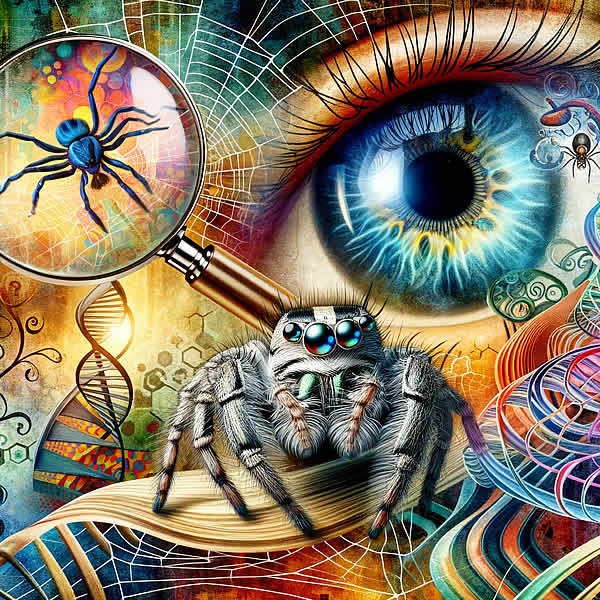
Ok, thanks for that. Finally I need an artistic image that sums up this conversation.
ChatGPT:
Here’s an artistic image that captures the essence of our diverse conversation about spiders. It combines elements of curiosity, scientific inquiry, and the intricate beauty of spider webs, reflecting the various themes we’ve explored.
Prompt:
Great thank you.
ChatGPT:
You’re welcome! I’m glad you enjoyed the conversation and the image. If you have any more questions or need assistance in the future, feel free to reach out. Have a great day!